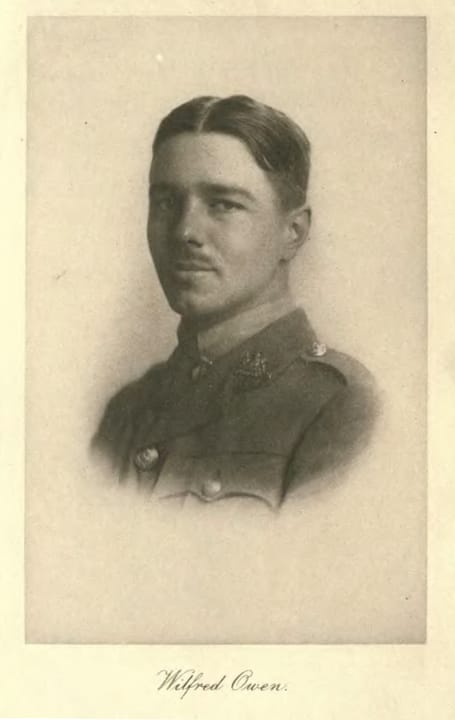
Virtual Memorial
Wilfred Owen
A Memory Realm virtual memorial place honoring Wilfred Owen, remembered for War poetry, World War I, English literature.
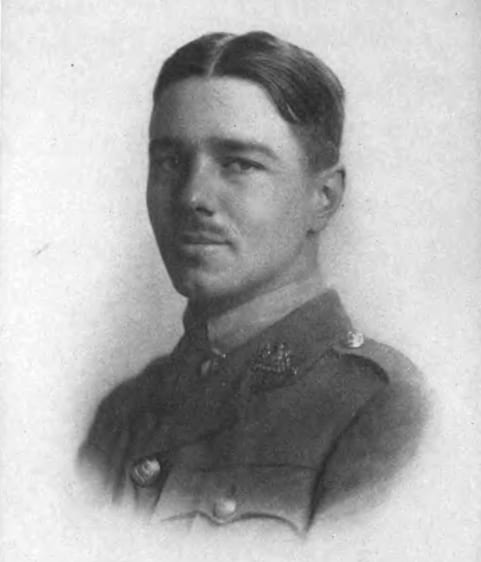
Why Wilfred Owen Is Remembered
Wilfred Owen is remembered for war poetry, world war i, english literature. This public page gives visitors a concise starting point for understanding why this figure remains part of cultural, civic, scientific, or literary memory.
The page is designed as an accessible introduction rather than an exhaustive account, with source links and image credits kept visible for further reading.
A Virtual Memorial in Memory Realm
This Memory Realm memorial hall turns a map reference into a virtual place for discovery. Visitors can move from the public page to the map and then into a 3D memorial hall connected to Wilfred Owen.
The place is part of Memory Realm's virtual layer. It is not a physical marker and does not claim rights, control, access, endorsement, or affiliation connected to a real-world site.
Place Context
Oswestry, England, United Kingdom is used as a broad spatial reference for this memorial hall because it is connected to Wilfred Owen's story, memory, or public legacy. The location is intentionally city-level or region-level so the page can provide orientation without implying a claim over a specific property or institution.
Historical Context
Wilfred Edward Salter Owen was an English poet and soldier. He was one of the leading poets of the First World War. His war poetry on the horrors of trenches and gas warfare was much influenced by his mentor Siegfried Sassoon and stood in contrast to the public perception of war at the time and to the confidently patriotic verse written by earlier war poets such as Rupert Brooke. Among his best-known works – most of which were published posthumously – are "Dulce et Decorum est", "Insensibility", "Anthem for Doomed Youth", "Futility" and "Strange Meeting". Owen was killed in action on 4 November 1918, a week before the Armistice, at the age of 25.
Memory Realm presents this context for educational discovery and remembrance, with public source links and media attribution preserved alongside the page content.
Photos
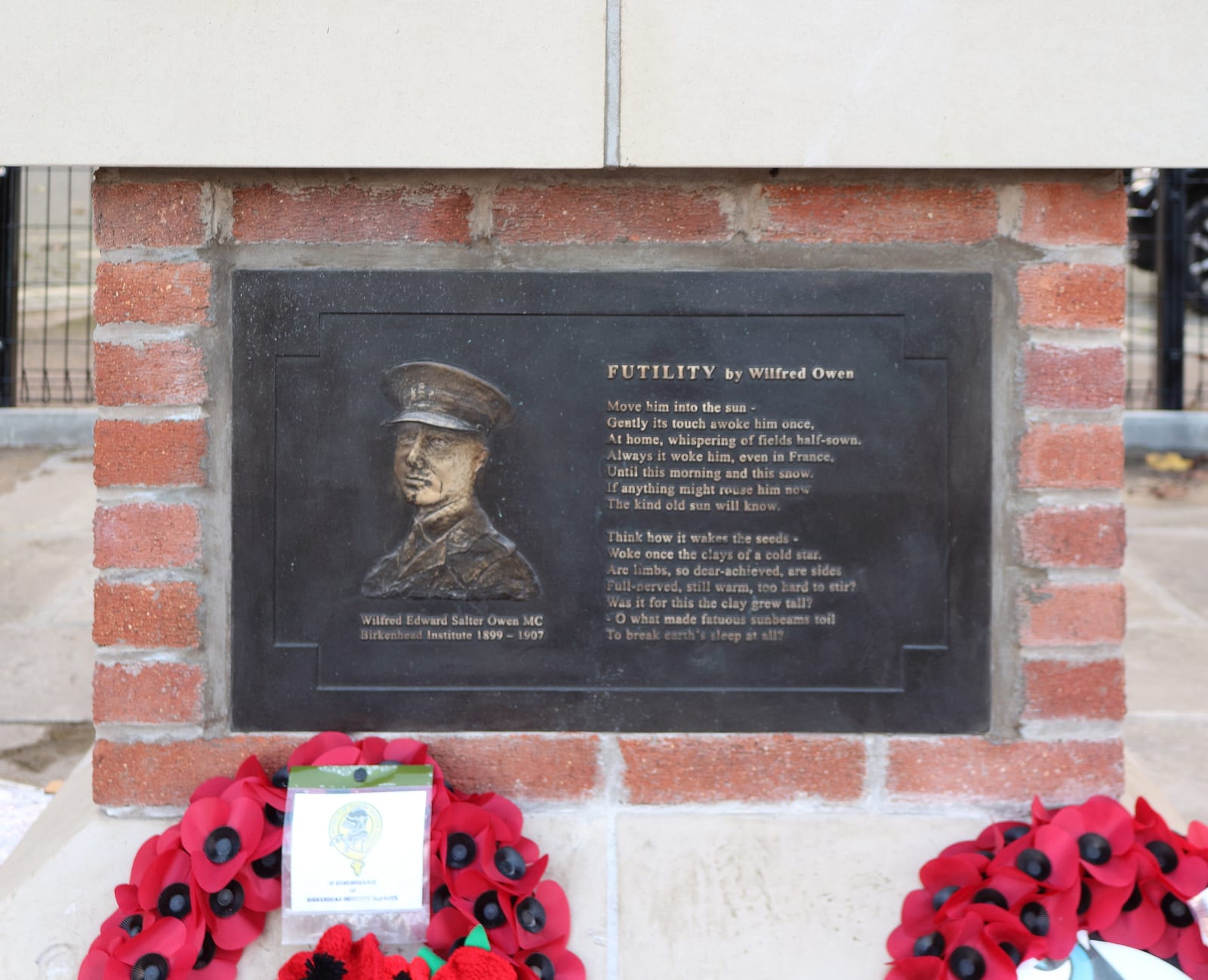
Metal panel featuring an embossed portrait of Wilfred Owen and the text of one of his poems, "Futility".
Rodhullandemu, Own work, CC BY-SA 4.0, via Wikimedia Commons
Source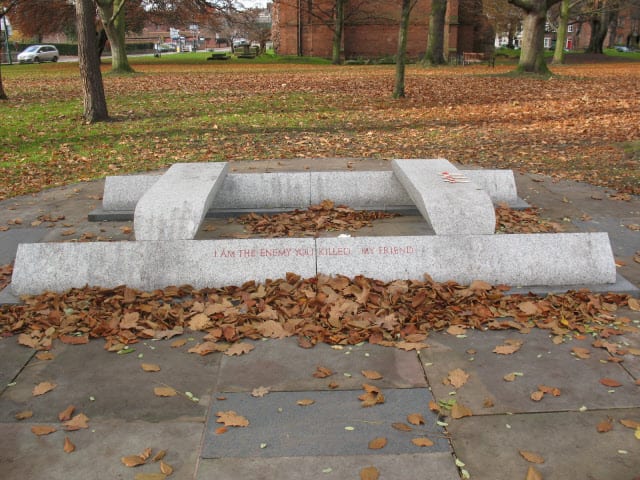
Symmetry: Wilfred Owen memorial The famous Great War poet Wilfred Owen lived close to Shrewsbury Abbey. He was killed in the war on 4 November 1918 - a week before the Armistice. H
Stephen Craven, From geograph.org.uk, CC BY-SA 2.0, via Wikimedia Commons
Source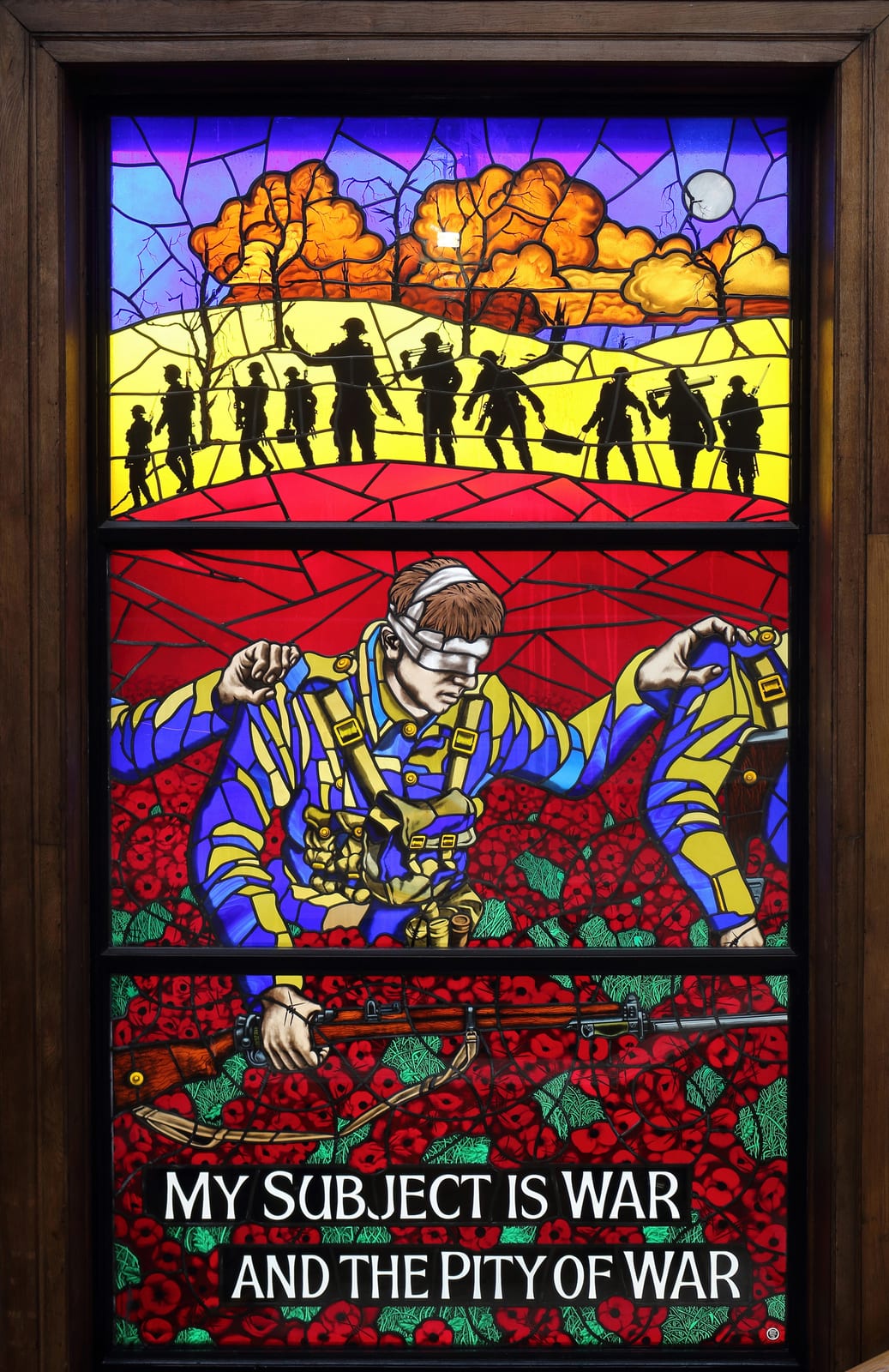
The window memorial to Wilfred Owen in the stairwell of Birkenhead Central Library
Rodhullandemu, Own work, CC BY-SA 4.0, via Wikimedia Commons
SourceSources
Related Memorials
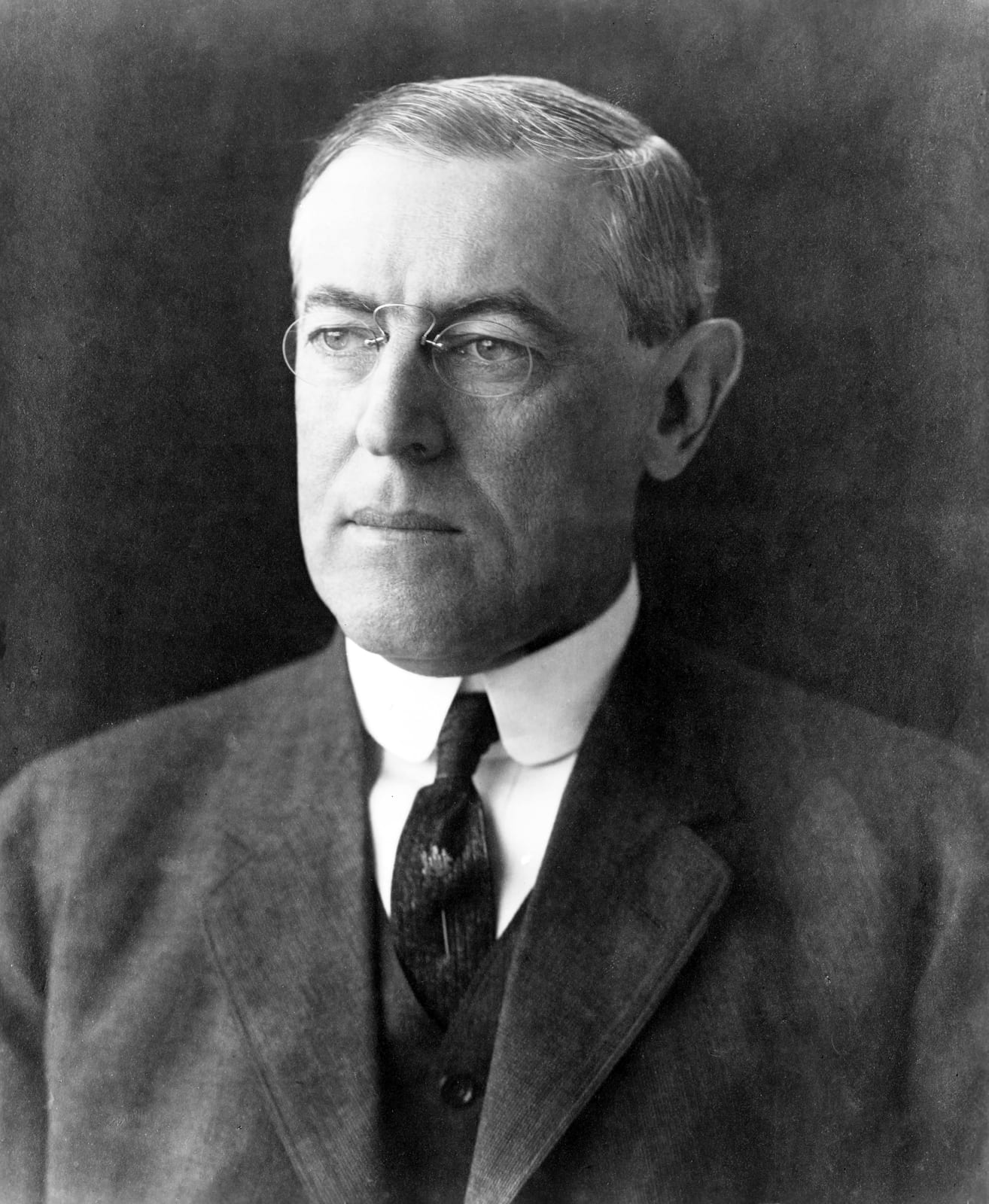
Woodrow Wilson
Princeton, New Jersey, United States
A Memory Realm virtual memorial place honoring Woodrow Wilson, remembered for Presidency, World War I, League of Nations.
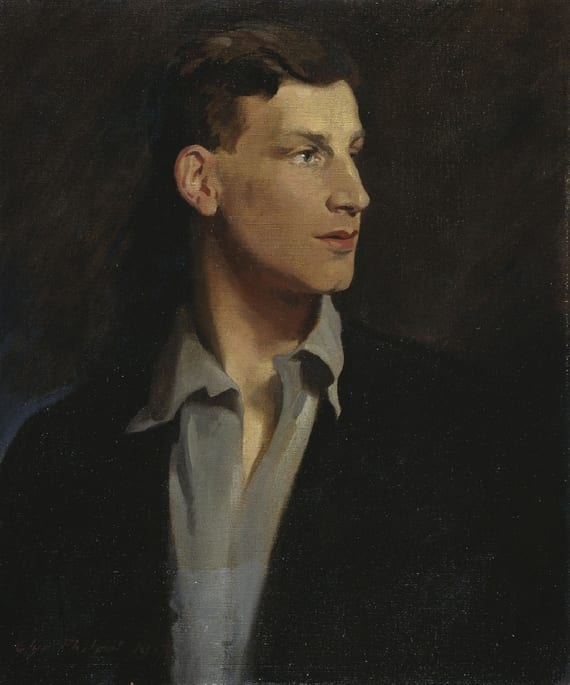
Siegfried Sassoon
Kent, England, United Kingdom
A Memory Realm virtual memorial place honoring Siegfried Sassoon, remembered for War poetry, Memoir, World War I.
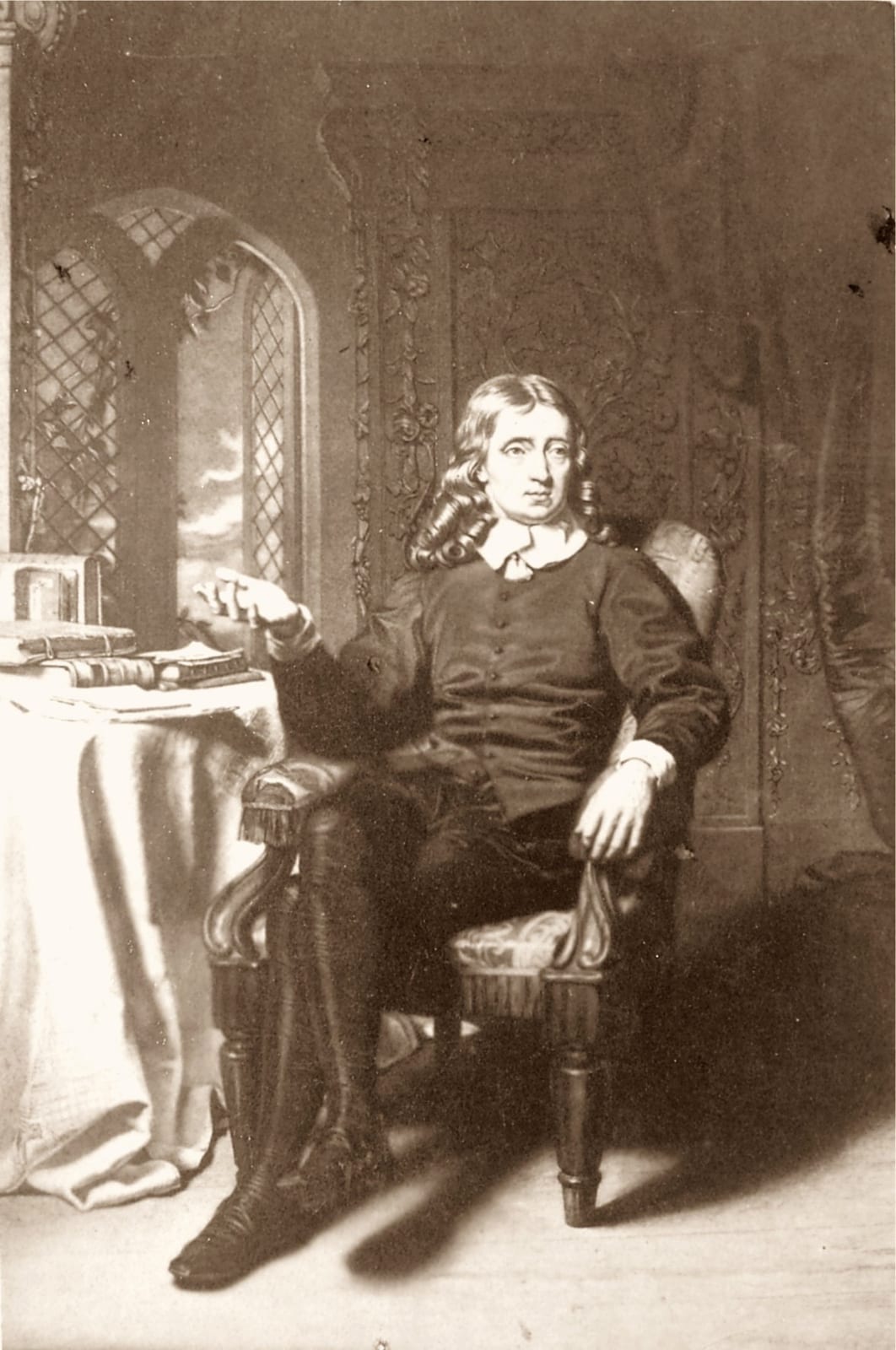
John Milton
London, England, United Kingdom
A Memory Realm virtual memorial place honoring John Milton, remembered for Poetry, Paradise Lost, English literature.
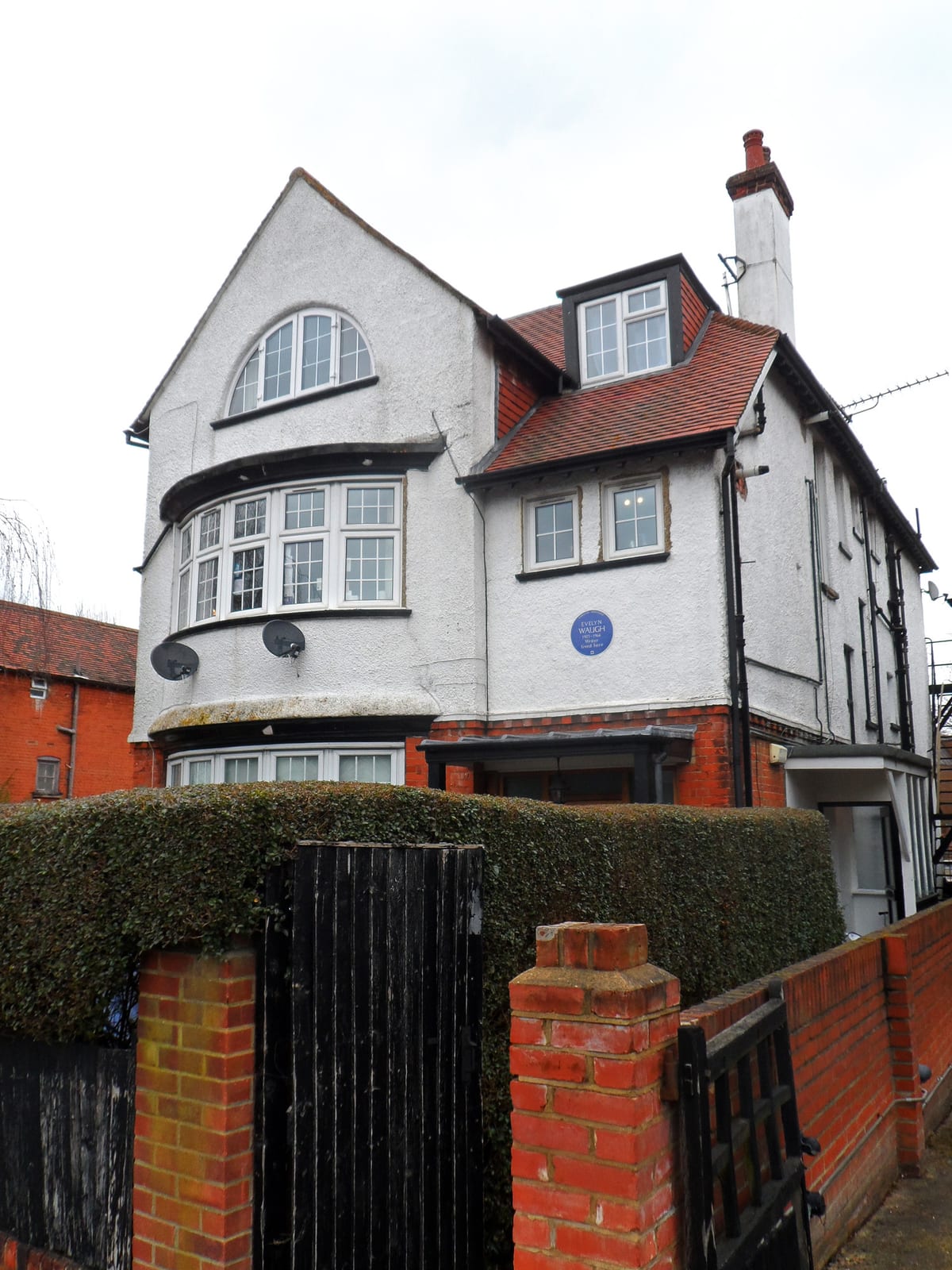
Evelyn Waugh
Somerset, England, United Kingdom
A Memory Realm virtual memorial place honoring Evelyn Waugh, remembered for Satire, Novels, English literature.
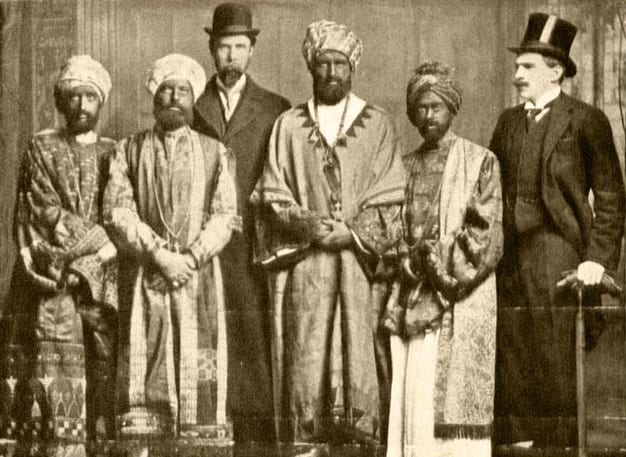
Virginia Woolf
London, England, United Kingdom
A Memory Realm virtual memorial place honoring Virginia Woolf, remembered for Modernism, English literature, Essays.
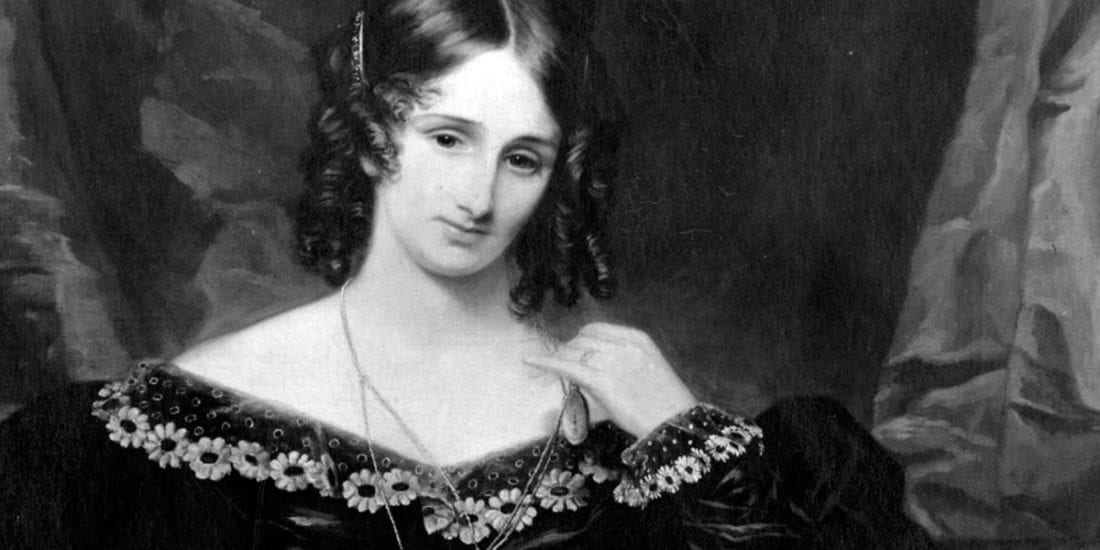
Mary Shelley
London, England, United Kingdom
A Memory Realm virtual memorial place honoring Mary Shelley, remembered for Frankenstein, Gothic fiction, English literature.